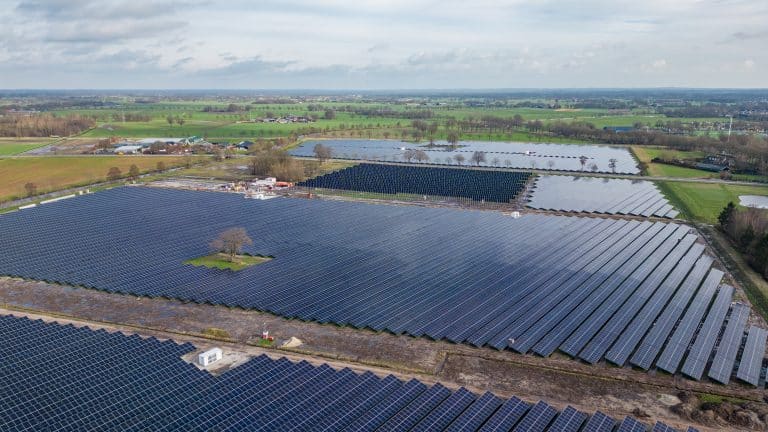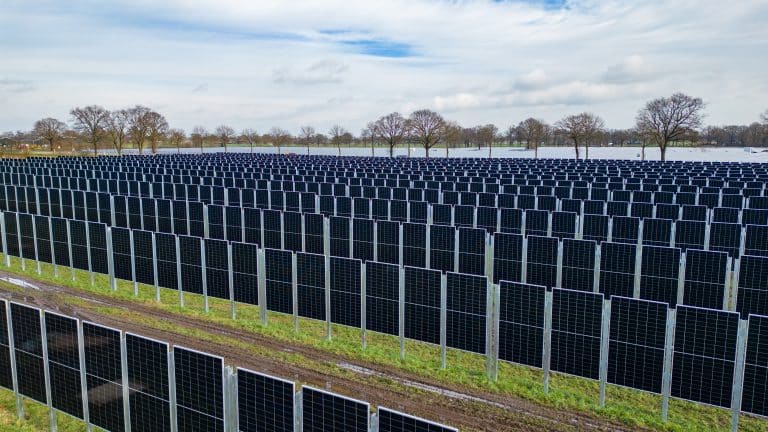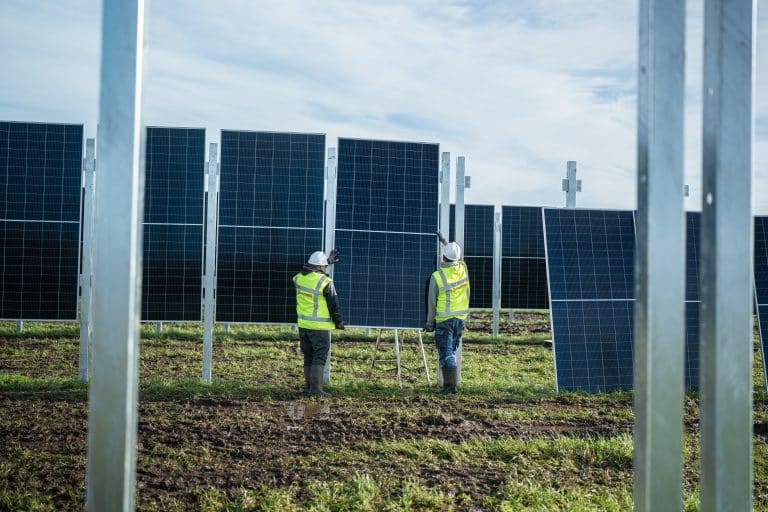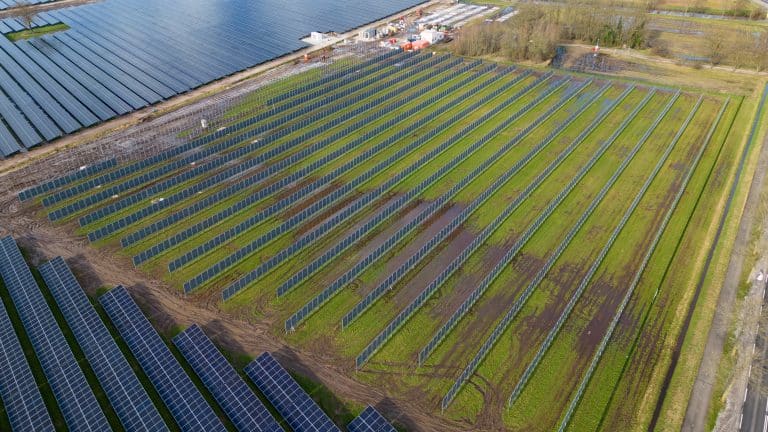

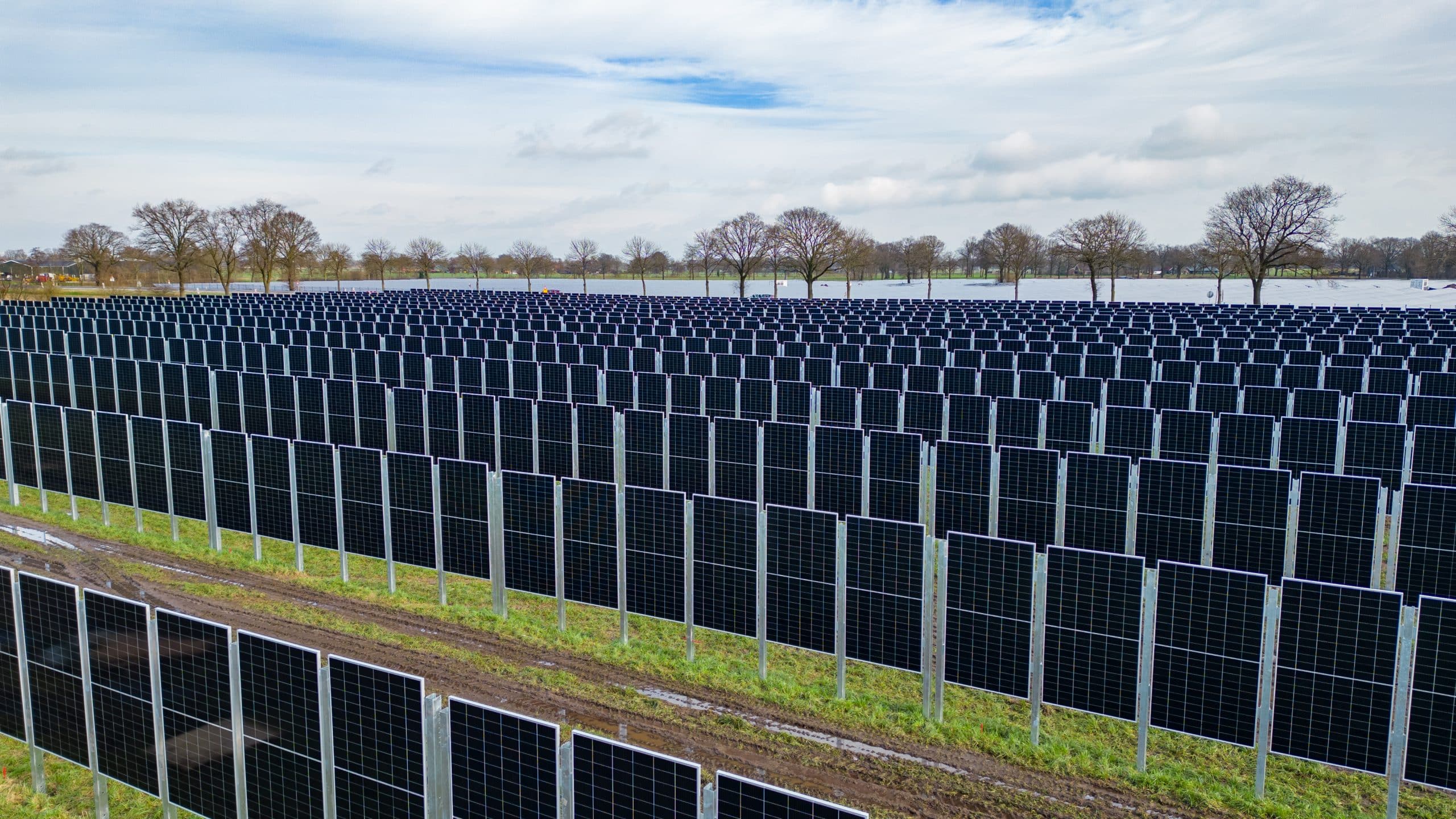
Double harvest on 32,000 square metres of prime arable land in Almelo, the Netherlands: 22 rows of vertically installed photovoltaic modules deliver at least 1.7 gigawatts of solar power every year. The entire solar power production of the agri-PV system is marketed regionally with a power purchase agreement.
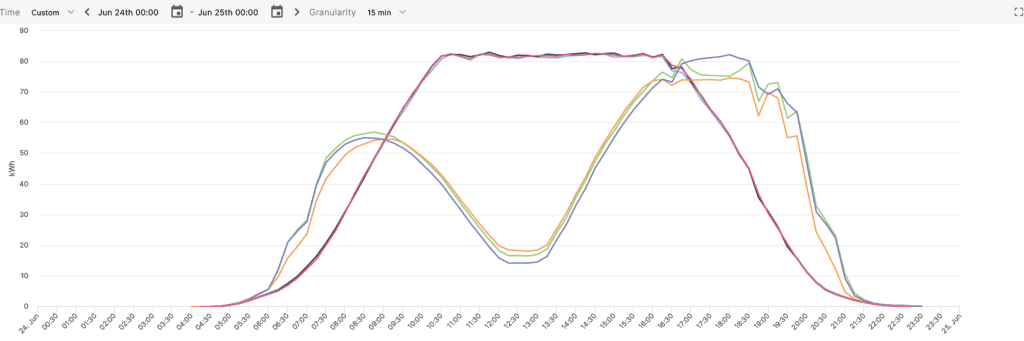
A total of 2,952 photovoltaic modules, each with a peak output of 660 watts, were installed in the agri-PV system near Almelo. At 1.948 megawatts, the total output of the system is less than what could have been achieved on the three hectares with a classic ground-mounted system. In return, almost 90 percent of the area remains available for agricultural use. The modules produce electricity on both the front and back (bifacial modules) and are installed in an east-west direction. Thanks to this design and orientation, the system already delivers significantly more electricity than a classic open-space system at sunrise. The same applies in the evening when the sun sets in the west. The performance curve of vertically installed east-west oriented photovoltaics differs from classically installed south-facing photovoltaics in that it produces high output in the morning and evening and low output at midday. This makes vertical photovoltaics with bifacial modules the ideal complement to classic open-space systems.
This is also the case at the Almelo site: the 3-hectare agri-PV system is located in the middle of classic open-space systems with south-facing modules. The entire site has a capacity of 45 megawatts and was planned and implemented by ProfiNRG on behalf of Klimaatfonds Nederland.
East-west power curve of vertical agri-PV reduces feed-in losses
In the Renewable Energy Sources Act (EEG 2023), Section 51 regulates the ‘reduction of payment claims in the event of negative prices’. If the spot market price falls below zero cents because there is too much electricity in the grid, no feed-in tariff is paid. This applied in 2023 if the spot market price was negative for at least four consecutive hours. In 2024 and 2025, it will be three consecutive hours. In 2026, it will be two hours, and in 2027, it will be one hour. Vertically installed east-west agri-PV systems produce a lot of electricity in the early morning and late afternoon, but little at midday. This means that the expected loss of unpaid feed-in tariffs due to negative spot market prices is minimal.
Facts and figures:
- Area: approx. 3.2 hectares
- System type: vertical agri-PV system with east-west orientation. 22 parallel rows.
- Row spacing approx. ten metres for dual use for PV and crop cultivation.
- 2,952 photovoltaic modules, bifacial, each with 660 watts peak power
- Sold with power purchase agreement (PPA)
- The agri-PV system is combined with other ground-mounted PV systems with a total output of 45 megawatts peak.
- Total annual production: approx. 43,000 MWh
- Location: Almelo, Netherlands
- Client Klimaatfonds Nederland
- Planning and implementation: ProfiNRG
Read also: Agri-PV in action: live data shows the potential
Contact information:

ProfiNRG Deutschland
Christian Steinberg
Business Development Manager Germany
Mobile: + 49 175 5943143
Email: christian@profinrg.com