


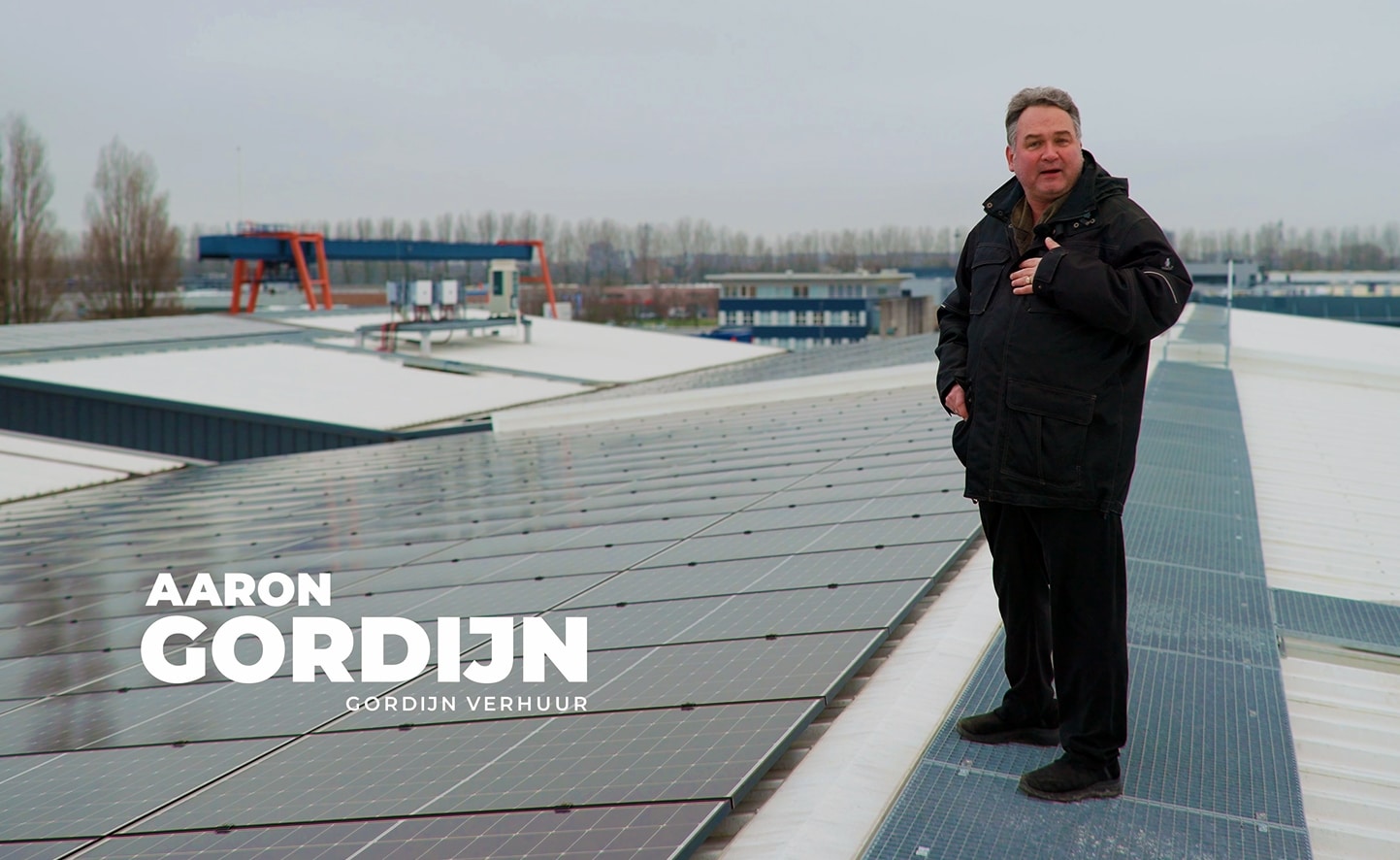
Electricity prices are rising due to peak summer demand: a structural shift in the energy market

The electricity market is changing rapidly. Whilst peak demand was primarily a winter phenomenon for many years, the summer is now having an increasingly significant impact on price trends. Recent price rises show that heatwaves, increasing electrification and changing generation patterns are creating a new reality.
Rising demand for electricity in the summer
On hot days, demand for electricity rises significantly. Households use air conditioning, charge electric vehicles and switch on more appliances. In the commercial sector, this effect is even more pronounced: offices, data centres, retail and industry are increasingly reliant on cooling to maintain stable processes and working environments.
At the same time, a tension arises, particularly in the evenings. Solar energy production declines, whilst demand remains high. This leads to peaks during which more expensive energy sources are needed to keep the electricity grid in balance.
Structural change, not a temporary spike
According to Luco Brouwer of Profinrg, this development is no isolated incident:
“We are seeing a structural shift in the energy system. Factors such as the electrification of both heating and cooling are driving up demand for electricity throughout the year. As a result, the summer peak is becoming just as significant as the winter peak.”
The growth in the use of air conditioning and air-to-air heat pumps plays an important role in this.
This also changes the risk profile of energy procurement, both for households and businesses.
Impact on the business market
The implications for businesses are significant. Sectors with high cooling demands – such as logistics, food, manufacturing and data centres – are increasingly having to contend with peak prices.
In addition, electricity consumption continues to rise due to:
- Electrification of processes
- Charging infrastructure for electric vehicles
- Increasing automation
Brouwer: “Companies that do not actively manage their energy consumption are becoming increasingly vulnerable to price volatility. That is precisely where there is significant potential for savings.”
Market incentives change behaviour
Price differences in the electricity market are widening. This means that it is not only sustainability, but above all cost savings, that are driving behaviour.
Things to bear in mind:
- Shift consumption to cheaper hours
- Smart vehicle charging
- Automatic control of systems
For businesses, this can result in significant savings, particularly when high-volume consumption can be used flexibly.
The role of storage and flexibility
Storage plays a key role in the new energy market. Batteries make it possible to store cheap energy at times when it is in abundance (for example, on sunny afternoons) and to use it later when prices are higher.
In addition, there are an increasing number of opportunities for flexibility:
- Demand response (temporary reduction in consumption)
- Smart control of systems
- Participation in energy markets
“Flexibility is set to become one of the most important assets in the energy system. Not only for network operators, but also, and in particular, for businesses that want to keep their energy costs under control,” said Brouwer.
Start with the basics: efficient energy use
Although technology plays an important role, optimisation starts with the basics. Using energy efficiently directly reduces dependence on peak prices.
The following applies to both households and businesses:
- Good insulation prevents excessive cooling demand
- Sun protection and building optimisation limit heat gain
- Efficient systems reduce overall consumption
The role of Profinrg
In this dynamic energy market, Profinrg supports organisations in making strategic decisions regarding energy.
Things to bear in mind:
- Energy procurement and contract strategy
- Analysis of consumption profiles
- Business cases for battery storage
- Implementation of flexibility solutions
- Active management of dynamic pricing and market opportunities
Brouwer: “The energy transition is not just about more renewable energy, but about using it more intelligently. Organisations that are focusing on this now will soon be leading the way.”
Conclusion
The energy market is undergoing fundamental change. The summer peak is no longer an exception, but a structural feature of the system.
The key lies in flexibility, smart management and strategic decisions.
Those who organise this effectively can not only minimise risks, but actually capitalise on the new dynamics in energy prices.
Want to find out where your opportunities lie? ProfiNRG quickly identifies them using a targeted quick scan. Get in touch
 Nederlands
  English (UK)
  Deutsch