

What are nature-inclusive solar parks?
Landscaping
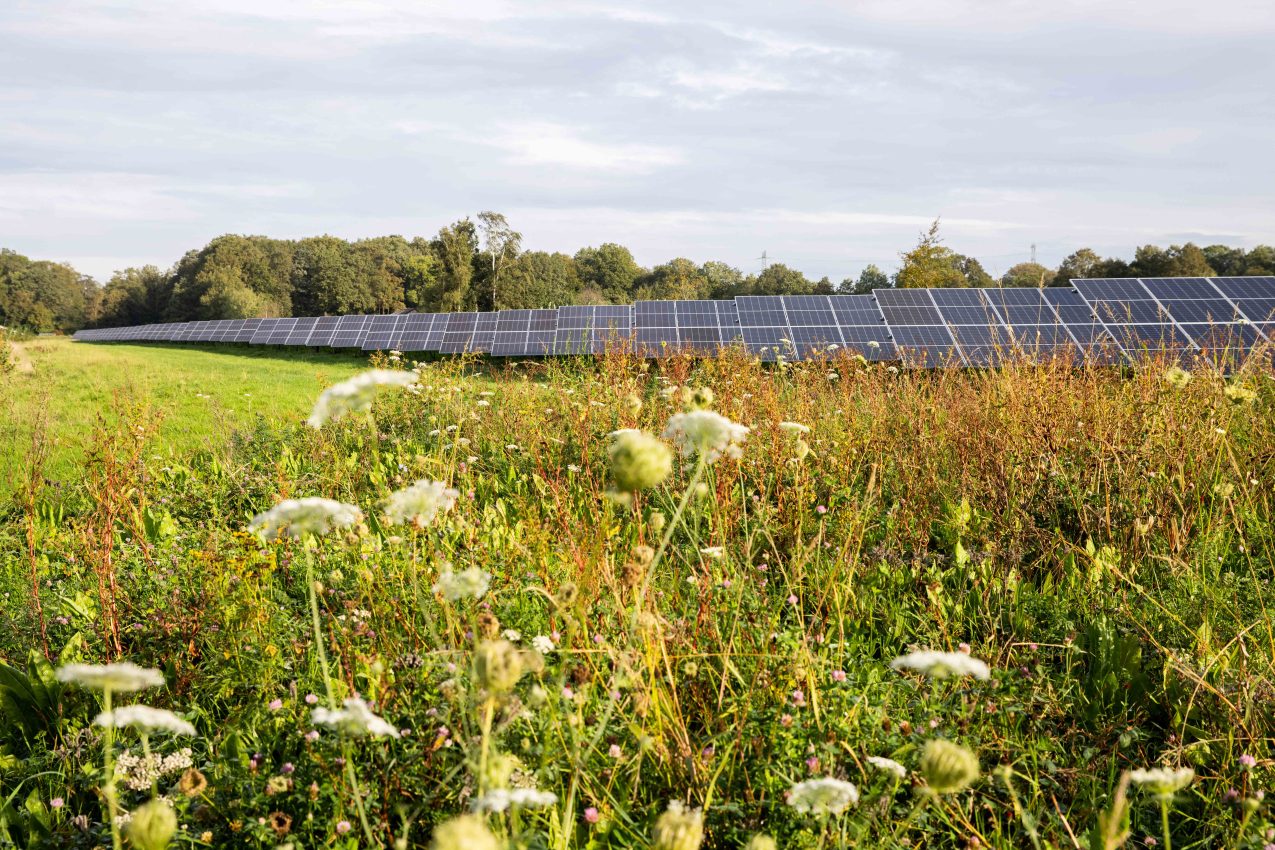
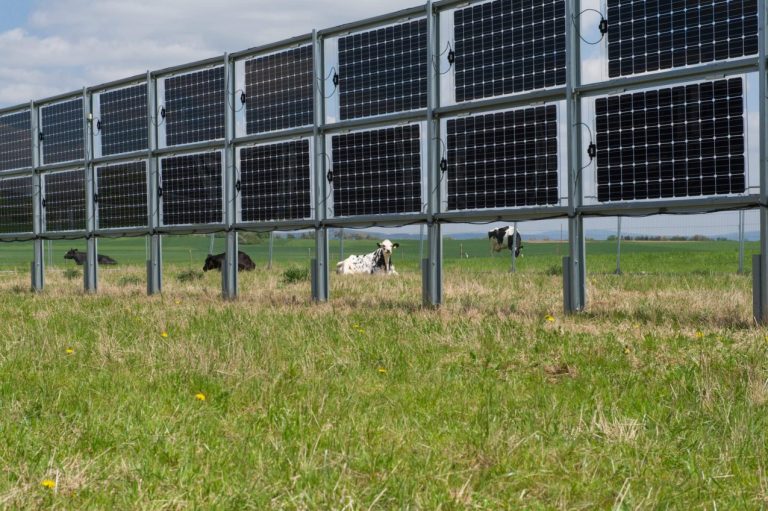
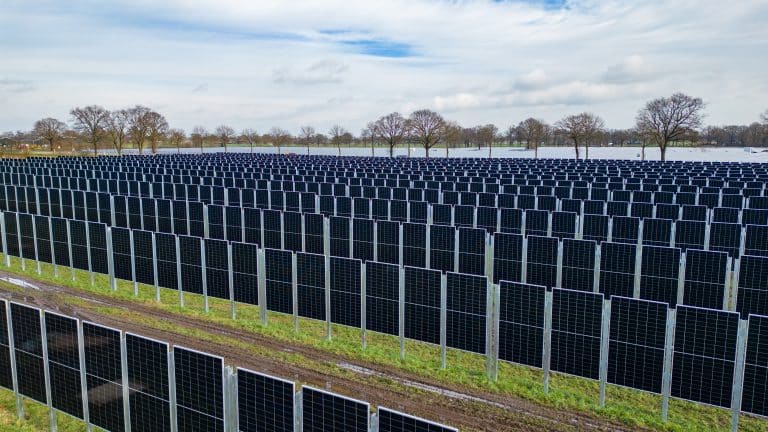
Nature-inclusive solar parks require a lot of attention to fit naturally into the landscape. The first solar parks built in the Netherlands had heights of up to 4 metres and steel fences with barbed wire. In the flat Dutch landscape, this was logically perceived as very disruptive. Many municipalities now apply a maximum height requirement of 1.5 metres. This allows a much more natural incorporation. Especially if wooded banks or hedges are planted around the solar farm.
In the choice of thicket planting, there is a preference for native species that fit the landscape values in the vicinity of the project. The choice of environment-specific species takes into account, among other things, the soil type, moisture content of the soil, sunlight situation and, of course, the location in the Netherlands.
Fences
When choosing fencing, there is a preference for natural colours and materials, such as chestnut posts with sheep mesh.
Wet and soggy
Due to climate change, there has been a sharp increase in precipitation quantity in the Netherlands. Many solar parks already have high groundwater levels. The space between panels is often boggy, due to relatively little evaporation. This wet marshy area is an ideal environment for meadow bird species such as the black-tailed godwit, skylarks and barn swallows. Reed fescue is a grass species that thrives here.
Furthermore, it is desirable to grow herbs in nature-inclusive solar parks. Meadow lime is a herb that grows well between panels because of the relatively cold and moist environment. Their deep roots help keep the soil airy. A healthy we needs a rich soil life. Manure from grazing keeps soil life active. Depending on the situation, you can also opt for soil attenuation by cutting and disposing of the grass.
Space for flora and fauna
In natural-inclusive solar parks, there is plenty of space for flora and fauna. The spaces between and around the panels are sown with herb-rich grass mixtures. Natural vegetation on solar parks provides shelter and food for amphibians and reptiles, and herb-rich flowering vegetation is beneficial for insects, such as bees and butterflies.
Nature: establishment and management plan
To preserve and enhance biodiversity, much attention needs to be paid to nature management on solar farms. That is why more and more municipalities are requiring the developer or operator of a solar park to draw up a design and management plan . Such a plan includes a soil quality study, an ecological study and social requirements for the management phase:
- A 0 measurement describing the current ecological quality of the site. What is the current state of nature at the site? How are the plants, animals and soil doing?
b. Objectives for preserving and strengthening soil, water and biodiversity (ecological quality). Think good soil, clean water and many different plants and animals.
c. Description of the landscaping and incorporation of the solar farm. The solar farm should fit well into the landscape. - The annual maintenance and management measures (management plan). Description of measures how the solar park is kept tidy.
e. description of how monitoring is carried out, how soil life and nature develops:
f. Management measures when monitoring shows that soil and ecological quality objectives are not being met.
Soil quality survey
One of the concerns with the construction of solar parks is the deterioration of soil quality and soil life. That is why municipalities require a soil quality study to be provided that shows, the soil quality and describes the effects of the panel arrangement on soil quality and groundwater. The aim of this study is to prevent negative effects and preferably achieve improvement. Measures to prevent deterioration of soil quality must also be described.
Ecological research
The ecological study describes:
a. How is the flora and fauna at the project site doing now.
b.How solar panels affect plants and animals.
c.What management plan is in place for conservation and enhancement of natural values.
d.Monitoring: How will the targets be monitored? keep an eye on whether everything is going well and whether we. e. What actions will be taken if it appears that biodiversity is declining.
Grant category: Solar PV - nature-inclusive
In the autumn round 2024 of the SDE++, it will therefore be possible (subject to legal and implementation details) to apply for subsidies for “nature-inclusive solar on land”. This requires that nature-inclusive measures are demonstrably taken and that requirements for this are included in the permit or policy frameworks.
Apply for SDE++ subsidy for Solar PV nature-inclusive?
Want to know more about this grant? Go to the SDE++ page.
Read here. sample texts for drafting social requirements for a nature-inclusive solar farm.

 Nederlands
  English (UK)
  Deutsch