
From Landfill to Solar Park: Rafelder Shows the Power of Collaboration

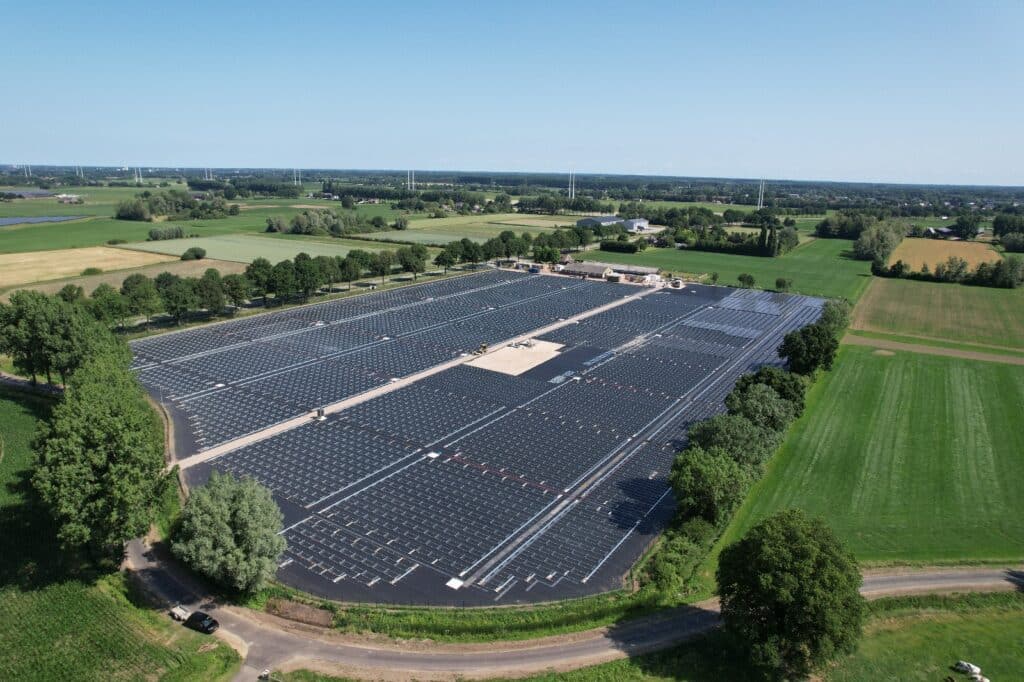
A unique solar energy project has been completed in the Gelderland village of Rafelder. On a former landfill with severely contaminated soil, a large-scale PV system is now generating clean energy. The project, developed by CCE The Netherlands in collaboration with ProfiNRG, demonstrates how even heavily contaminated sites can be used to generate sustainable energy.
From Polluted Soil to Level Ground
The greatest challenge lay in preparing the site. Due to the severe soil contamination, strict provincial requirements applied. A specialized consultancy drew up a civil specification, after which the province granted approval. The ground was leveled, covered with clean sand, and fitted with trenches to safely accommodate cables. To prevent mixing of clean and contaminated soil, the trenches were lined with foil. The entire site was finally covered with a geotextile, which not only prevents weed growth but also provides a stable, even foundation.
For the solar panels, a mounting system was used that is typically applied on flat rooftops. This required the soil beneath the geotextile to be perfectly level and stable. That proved challenging, since installation work was carried out directly on top of the geotextile.
Biodiversity as an integral part
In developing the solar park, a deliberate choice was made to let nature and technology go hand in hand. Fifteen measures were implemented to strengthen local flora and fauna. The landscaping plan includes planting native trees and shrubs and creating flower-rich grasslands that provide shelter and food for birds, insects, and small mammals. Site management is carried out entirely without chemical pesticides or fertilizers, helping the soil remain healthy and allowing natural processes to recover.
The local community was also actively involved: residents could apply for vouchers to realize biodiversity-friendly initiatives, such as planting native species or creating habitats for wildlife. Even the fencing was carefully designed: by raising it twenty centimeters, the solar park remains accessible to small animals. In this way, the project contributes not only to clean energy production but also to a more resilient ecosystem in the region.
Smart Technical Choices
The chosen approach did involve extra costs for leveling and the geotextile, but overall the project remained financially comparable to a standard solar park. The main difference was the method: the full technical design had to be completed before the civil works began, ensuring that every step could be executed precisely as planned. Only then could the solar panels be installed.
Collaboration as the Key to Success
The close cooperation between CCE and ProfiNRG turned out to be highly effective. Although the partners signed a strict EPC contract, they opted in practice for a flexible and pragmatic approach. ProfiNRG also actively supported communication with the municipality and the grid operator.
The collaboration was based on earlier experiences and mutual trust. ProfiNRG additionally contributed extensive expertise from previous landfill projects. The involvement of trusted subcontractors and an experienced site manager made execution even more efficient.
Learning to Handle the Unexpected
As with many infrastructure projects, unforeseen obstacles arose along the way. Permits were sometimes incomplete, or authorities introduced new requirements. Changing regulations, such as the mandatory shift to SF6-free switchgear from 2026 onward, also had an impact. By responding flexibly and seeking alternative solutions, delays and extra costs were kept to a minimum.
Lessons for the Sector
With the completion of the solar park in Rafelder, it has been proven that contaminated and hard-to-access sites can be given a new lease of life. According to CCE and ProfiNRG, three key lessons stand out:
- Select an experienced local EPC partner with knowledge of soil and regulations.
- Work with a dedicated project team willing to find solutions together.
- Ensure that both remediation plan and technical design are fully completed before execution starts.
Thanks to this approach, a former environmental problem site now has a sustainable future: generating clean energy for the region. The solar park in Rafelder is thus an inspiring example of how the energy transition and soil remediation can go hand in hand.
Want to know more about solar farms in challenging locations?
Feel free to contact us—we'd love to brainstorm with you about your project. Call 030 265 85 12 or e-mail to mo@profinrg.com.